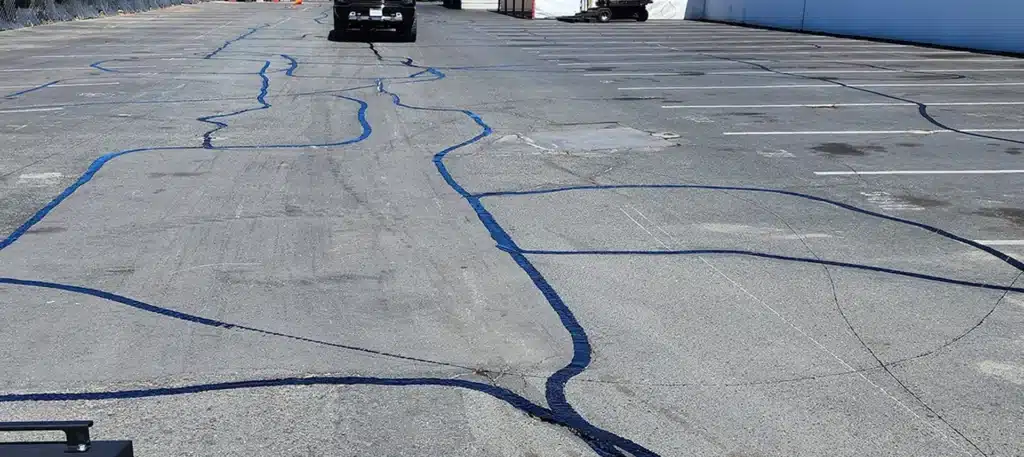
A commercial asphalt paving project involves much more than placing a layer of asphalt over an existing surface. A successful project usually includes site evaluation, preparation, grading, drainage planning, base work, asphalt installation, compaction, and final striping or finishing.
For business owners and property managers, understanding the process can make it easier to prepare the site and know what to expect from start to finish. Whether you are planning a new parking lot, replacing deteriorated pavement, or resurfacing an existing area, working with an experienced commercial paving company can help keep the project organized.
Businesses throughout the region can also learn more about Commercial Paving In Martinez, Pleasanton & Livermore, CA for additional information about commercial asphalt services.
Step 1: Evaluating the Existing Pavement
Most commercial paving projects begin with a site evaluation.
The contractor may inspect:
- Existing cracks
- Potholes
- Drainage issues
- Low spots
- Pavement settlement
- Surface deterioration
- Base stability
- Traffic patterns
- Loading areas
- Access points
These conditions help determine what kind of work the property needs.
Some commercial lots may only require resurfacing, while others may need full removal and replacement.
Businesses searching for paving contractors Martinez CA, paving contractors Pleasanton CA, or paving contractors Livermore CA should look for contractors that evaluate the entire pavement system before recommending a solution.
Step 2: Planning the Project
Commercial paving needs to be coordinated around the way the property is used.
Before work begins, the contractor and property owner may discuss:
- Customer access
- Employee parking
- Delivery routes
- Tenant access
- Heavy vehicle traffic
- Project phasing
- Temporary closures
- Work hours
A busy commercial property may not be able to shut down an entire parking lot at once.
In those situations, a parking lot paving company may be able to divide the work into sections so portions of the property remain accessible.
Good planning can help reduce disruption during the project.
Step 3: Removing Damaged Asphalt
If the existing pavement is severely deteriorated, it may need to be removed.
Damaged asphalt with widespread cracking, potholes, or settlement may no longer provide a stable surface for new pavement.
Removing failed areas allows asphalt paving contractors to inspect the supporting materials underneath.
In some cases, only specific sections need to be removed. In others, complete removal may be more appropriate.
The right approach depends on the condition of the pavement and base.
Step 4: Preparing the Base
The base is one of the most important parts of a commercial asphalt paving project.
Asphalt relies on the underlying material for support.
If the base is weak, poorly compacted, or damaged by water, the finished pavement may develop cracks, settlement, or potholes sooner than expected.
Base preparation can include:
- Removing unstable material
- Adding aggregate
- Grading
- Compacting
- Correcting soft areas
- Establishing proper elevations
A well-prepared base helps distribute vehicle loads and support the finished asphalt surface.
This is especially important for properties that handle heavy trucks or frequent commercial traffic.
Step 5: Correcting Drainage and Grading
Water can cause major problems for asphalt if it is allowed to sit on the surface or enter cracks.
Before new asphalt is installed, the contractor may evaluate how water moves across the site.
The parking lot should be graded so runoff moves toward appropriate drainage areas.
That may include drains, gutters, swales, or other systems.
Proper grading can help reduce:
- Standing water
- Low spots
- Premature cracking
- Base deterioration
- Pothole formation
- Settlement
Businesses searching for commercial paving companies near me should ask whether drainage will be reviewed before paving begins.
Simply covering a drainage problem with new asphalt may not provide a lasting solution.
Step 6: Installing the Asphalt
Once the site and base are ready, the asphalt can be placed.
The material is spread over the prepared surface to the required depth and elevation.
The exact pavement design depends on the property.
A standard office parking lot may have different requirements than an industrial property with frequent truck traffic.
A commercial paving company should consider:
- Vehicle weight
- Traffic volume
- Turning patterns
- Loading areas
- High-use zones
The goal is to create pavement that matches how the site will actually be used.
Step 7: Compacting the Pavement
After the asphalt is placed, it must be compacted.
Compaction helps create a dense and stable surface.
It also helps reduce excessive air voids within the pavement.
Proper compaction is important for long-term asphalt performance.
Contractors also pay attention to transitions between new asphalt and nearby surfaces such as:
- Concrete
- Curbs
- Driveways
- Existing pavement
- Drainage structures
- Street entrances
Smooth transitions help make the property easier to navigate.
Step 8: Allowing the Asphalt to Set
Fresh asphalt should not be opened to traffic immediately.
The contractor will usually provide guidance about when vehicles can return.
The timing can depend on:
- Weather
- Pavement thickness
- Temperature
- Vehicle weight
- Project conditions
Heavy trucks may need to stay off the new pavement longer than passenger vehicles.
Following the contractor’s instructions can help protect the fresh surface during its early stages.
Step 9: Parking Lot Striping and Finishing
Once the asphalt is ready, striping can be completed.
Striping helps organize the property and improve traffic flow.
It may include:
- Parking spaces
- Accessible parking
- Fire lanes
- Loading zones
- Directional arrows
- Reserved areas
- Pedestrian markings
- No-parking zones
Fresh striping also improves the appearance of a newly paved lot.
Businesses searching for the best parking lot paving company near me may want to choose a contractor that can help coordinate both paving and finishing services.
What Happens After the Project Is Complete?
Commercial asphalt still requires maintenance after installation.
Property owners should inspect the pavement periodically for:
- New cracks
- Potholes
- Standing water
- Settlement
- Edge deterioration
- Surface wear
- Faded striping
Over time, maintenance may include crack filling, patching, sealcoating, resurfacing, or re-striping.
Addressing small issues early can help prevent them from turning into more extensive pavement problems.
Why Professional Commercial Paving Matters
A paving project involves many layers that are not visible once the work is finished.
The condition of the base, grading, drainage, asphalt placement, and compaction all influence how well the pavement performs.
That is why choosing a qualified paving contractor near me matters.
A contractor should not only focus on the final surface but also evaluate the supporting structure and site conditions.
Businesses managing multiple properties may also benefit from working with one regional team for projects in Martinez, Pleasanton, and Livermore.
Start Your Commercial Asphalt Paving Project
A commercial paving project typically moves through several stages, from site evaluation and preparation to asphalt installation and final striping.
Each step contributes to the durability and function of the finished pavement.
If your business needs a new parking lot, asphalt replacement, resurfacing, or other pavement improvements, The Paving Company General Engineering can evaluate the site and discuss your options.
Call 925-497-3974 to discuss your commercial paving needs or send a message through the website to request more information.
Whether you need commercial asphalt paving, an experienced parking lot paving company, or help planning a larger commercial project, The Paving Company General Engineering can help you understand what to expect from start to finish.