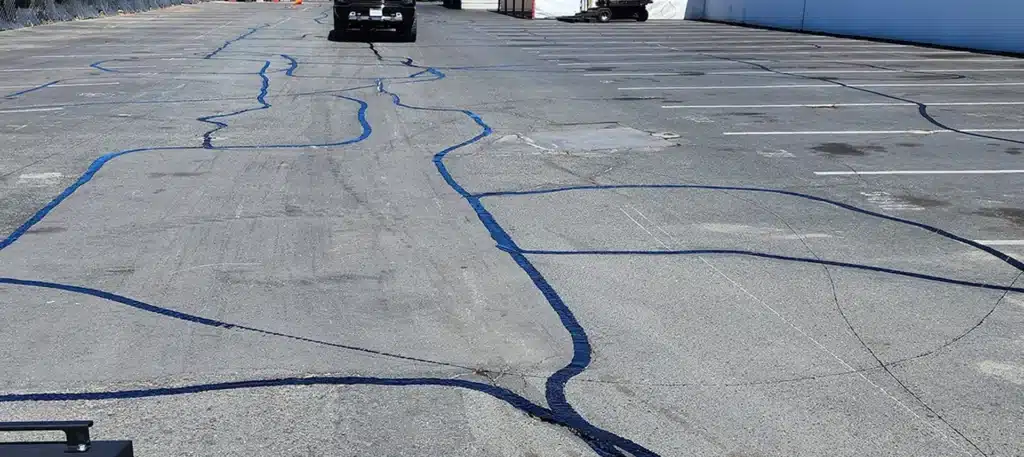
Commercial asphalt installation involves much more than simply placing a layer of pavement over the ground. A durable commercial parking lot or paved area depends on proper site preparation, grading, drainage, base construction, asphalt placement, and compaction.
For Pleasanton businesses, the installation process should be planned around how the property will actually be used. A small office parking lot may primarily handle passenger vehicles, while an industrial property may need to accommodate delivery trucks, equipment, and heavier traffic.
Businesses looking for Commercial Asphalt & Paving Services In Pleasanton, CA can also benefit from understanding how professional asphalt installation works throughout the region. For a broader overview, visit our guide to Commercial Paving In Martinez, Pleasanton & Livermore, CA.
Step 1: Evaluating the Commercial Property
Before new asphalt is installed, the site should be evaluated carefully.
A commercial paving company may look at factors such as:
- Existing pavement condition
- Soil and base conditions
- Drainage
- Grading
- Traffic patterns
- Vehicle weight
- Parking layout
- Building access
- Loading zones
- Surrounding concrete
These details help determine how the project should be prepared.
Businesses searching for paving contractors Pleasanton CA property owners can rely on should look for a contractor that considers the entire site rather than focusing only on the visible asphalt surface.
Step 2: Removing Existing Pavement When Necessary
If the property already has severely deteriorated asphalt, some or all of the existing pavement may need to be removed.
Old asphalt with widespread cracking, potholes, settlement, or structural failure may not provide a suitable foundation for new pavement.
Removing damaged material allows asphalt paving contractors to inspect the area underneath and correct unstable sections before the new surface is installed.
In some cases, the existing pavement may still be stable enough for resurfacing rather than complete reconstruction.
A professional evaluation can help determine which approach makes sense.
Step 3: Preparing the Base
The base is one of the most important parts of a commercial asphalt paving project.
Asphalt relies on the supporting layers beneath it. If those layers are unstable, poorly compacted, or weakened by water, the finished pavement may be more likely to crack or settle.
Base preparation may include:
- Removing unsuitable material
- Adding aggregate
- Grading the site
- Compacting the base
- Correcting soft areas
- Establishing proper elevations
A strong, properly prepared base helps distribute vehicle loads and support the asphalt above it.
This is especially important on commercial properties that regularly accommodate trucks or heavy equipment.
Step 4: Establishing Proper Drainage and Grading
Water should not remain on a commercial parking lot after rainfall or irrigation.
Before asphalt is placed, the site should be graded to direct water toward appropriate drainage areas.
Poor drainage can contribute to:
- Standing water
- Cracking
- Potholes
- Base deterioration
- Pavement settlement
- Edge erosion
The finished surface needs enough slope to move water away while still providing smooth access for vehicles and pedestrians.
When businesses search for commercial paving companies near me, drainage experience should be an important consideration.
Installing new asphalt without correcting an existing drainage problem can allow pavement damage to return.
Step 5: Placing the Asphalt
Once the site and base are prepared, the asphalt can be installed.
Hot asphalt material is placed over the prepared surface and spread to the required thickness and elevation.
The appropriate pavement design depends on how the property will be used.
A parking lot primarily used by passenger vehicles may have different requirements than a warehouse driveway or commercial access road regularly used by trucks.
A qualified parking lot paving company should consider traffic volume and expected vehicle loads before determining the paving approach.
Step 6: Compacting the Asphalt
After the asphalt is placed, it must be compacted.
Compaction creates a dense, stable pavement surface and helps reduce excessive air voids in the material.
Proper compaction is important because insufficiently compacted asphalt can be more vulnerable to premature deterioration.
Contractors also need to pay attention to transitions where new asphalt meets:
- Existing pavement
- Concrete
- Curbs
- Driveways
- Drainage structures
- Roadways
Smooth transitions help create a more functional finished surface.
Step 7: Allowing the Pavement to Set
Fresh asphalt needs time before normal traffic resumes.
The exact timing can depend on factors such as weather, pavement thickness, vehicle type, and project conditions.
Businesses should follow the contractor’s guidance before allowing vehicles onto freshly paved areas.
This is particularly important for heavy trucks.
Driving heavy vehicles over pavement too soon can place unnecessary stress on the surface.
Step 8: Completing Parking Lot Striping
After the asphalt is ready, line striping can be added to organize the parking lot.
Striping may identify:
- Standard parking spaces
- Accessible parking
- Loading zones
- Fire lanes
- Directional arrows
- Reserved spaces
- Pedestrian areas
- No-parking zones
Clear markings improve the appearance of the property while helping drivers understand how to move through the parking area.
If you are searching for the best parking lot paving company near me, choosing a contractor that can help coordinate paving and finishing work can simplify the overall project.
Why Proper Installation Matters
Many asphalt problems that appear years later can be influenced by conditions below the surface.
For example, weak base material may eventually contribute to settlement. Poor grading may create standing water. Insufficient compaction may cause the pavement to deteriorate earlier than expected.
This is why commercial asphalt installation should be viewed as a complete system.
The visible asphalt is only one part of the finished pavement.
Property owners searching for a paving contractor near me should consider whether the contractor discusses preparation, drainage, base stability, and traffic requirements before installation begins.
How Can Businesses Protect New Asphalt?
Once new asphalt is installed, ongoing maintenance can help protect the investment.
Businesses should periodically inspect the property for:
- Cracks
- Potholes
- Standing water
- Surface wear
- Edge deterioration
- Settlement
- Faded striping
Cracks and localized damage should be evaluated before they spread.
Preventative services such as crack filling or sealcoating may also be appropriate at certain stages in the pavement’s life.
The goal is to address developing problems before they require more extensive repairs.
Commercial Paving Throughout the Region
The Paving Company General Engineering provides commercial asphalt paving and related services for properties throughout Pleasanton and surrounding Bay Area communities.
Businesses searching for paving contractors Martinez CA or paving contractors Livermore CA can also contact the team for regional paving projects.
Working with the same commercial paving company across multiple properties can make it easier to coordinate repairs, maintenance, and future paving needs.
Start Your Pleasanton Commercial Asphalt Project
A successful commercial asphalt installation depends on what happens both above and below the finished pavement.
Proper site preparation, base construction, drainage, grading, asphalt placement, and compaction all work together to create a durable paved surface.
If your Pleasanton property needs a new parking lot, asphalt replacement, resurfacing, or other commercial pavement work, The Paving Company General Engineering can evaluate your site and discuss the options available.
Call 925-497-3974 to discuss your commercial paving needs or send a message through the website to request more information.
Whether you need new commercial asphalt paving, parking lot improvements, or help maintaining existing pavement, The Paving Company General Engineering can help you plan the right approach for your property.